

Pitahaya
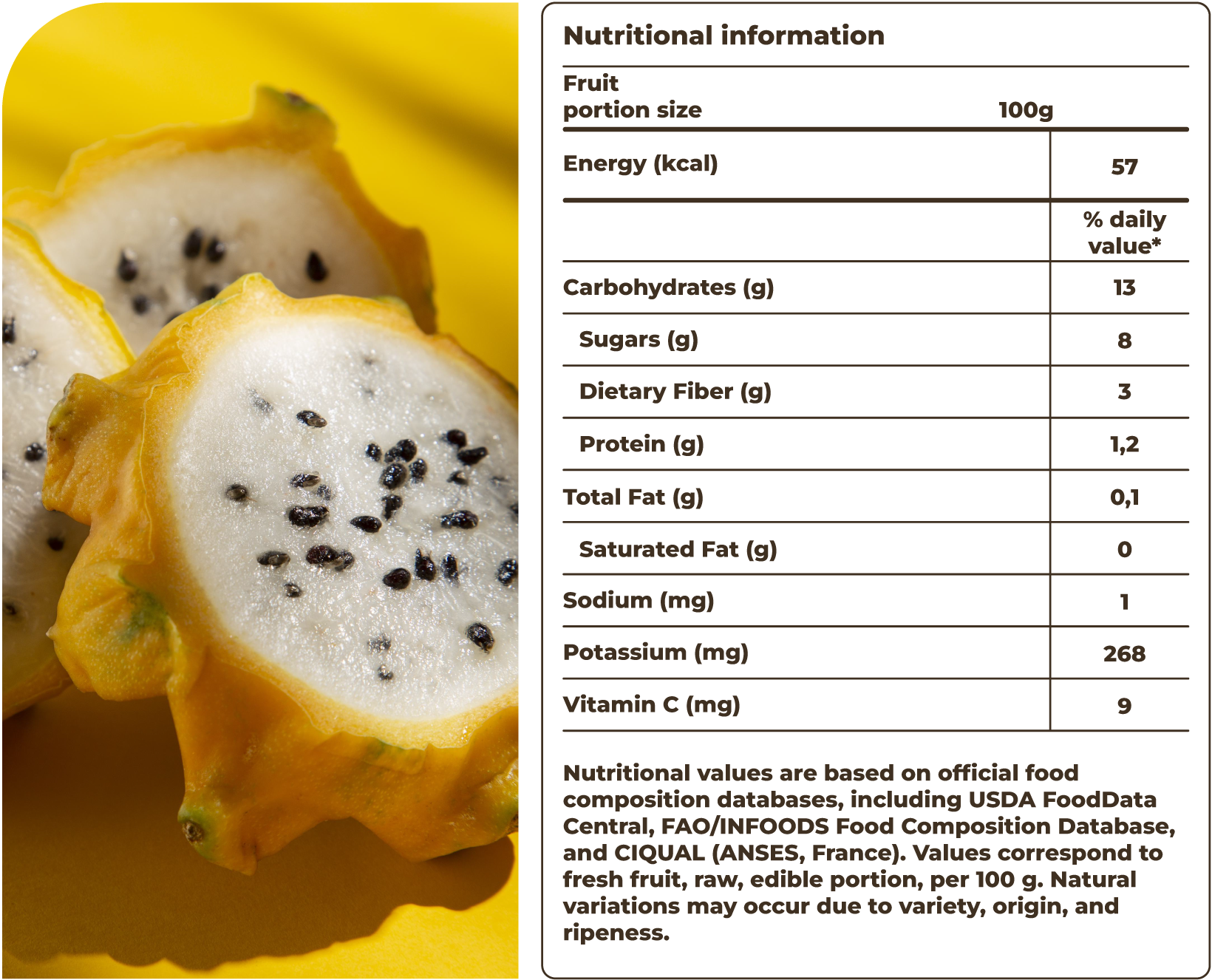
Pitahaya–also known as dragon fruit–belongs to the cactus family. The fruit has an oval shape with protruding formations. The skin is thick, smooth and has a color that varies from green to yellow as it matures. The pulp is greyish white, and dotted with small, edible black seeds. The taste is very sweet, sweeter than red pitaya.
The pitahaya can be consumed fresh, cutting it into halves and removing the pulp with a spoon, it can also be sliced. The pitahaya is known as a digestion-aid. If this effect is not desired, it is recommended to not chew the seeds. The skin is not edible.
Nutritional information

Minimum Brix degress

Crops

RECIPES
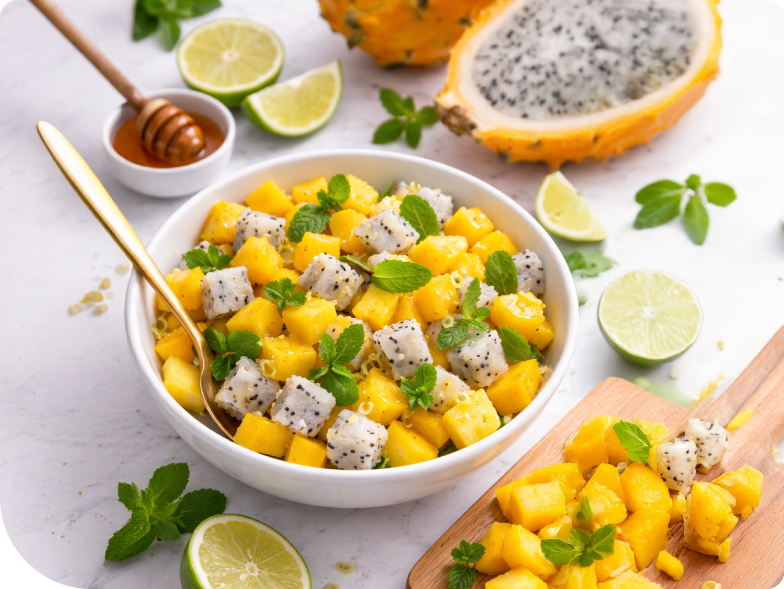
Fresh Dragon Fruit Salad
Dragon fruit has a mild and refreshing flavor. In this recipe it is combined with fresh fruits to create a light and colorful tropical salad.
Come and enjoy the freshness that only Caribbean
Recipes can offer!
INGREDIENTS





PREPARATION
Cut the fruit: Peel the dragon fruit and mango and cut into cubes.
Mix: Place the fruits in a bowl.
Add flavor: Add lemon juice and a little honey.
Garnish: Add mint leaves and mix gently.
Serve: Enjoy fresh.