

Passion Fruit
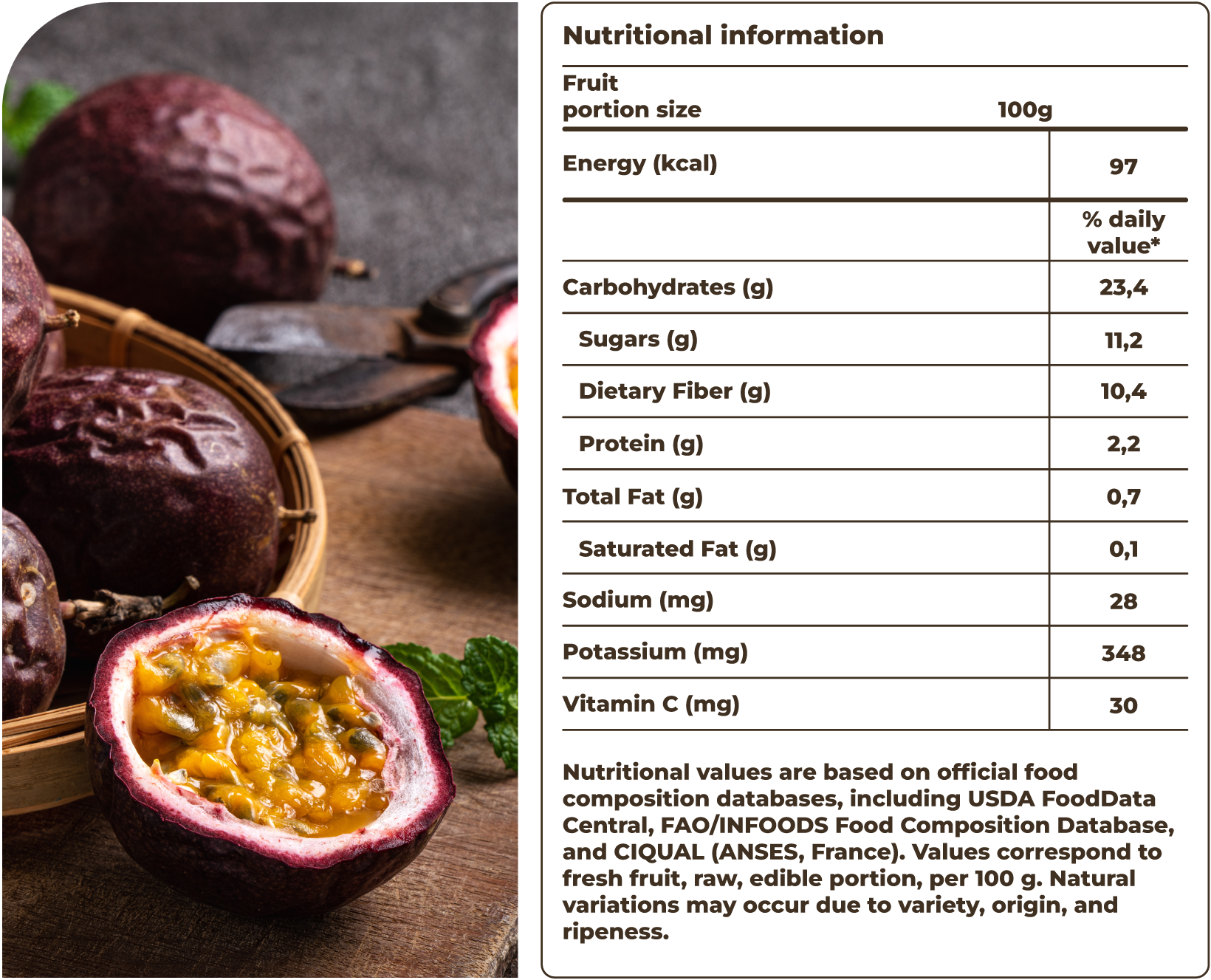
The Gulupa, also known as the passion fruit, belongs to the passionflower family along with Granadilla and Passion fruit.
Its skin is tough with a range of colors from green, purple, brown or red, according to its degree of maturity. Its pulp is gelatinous with an intense orange color with small, black, edible seeds. It has a slightly acidic taste. The skin is not edible.
When Passion fruit is ripe, its skin begins to wrinkle slightly. To consume it, cut in half and remove the pulp with a spoon. The Passion fruit is also used to prepare salads, juices, sauces, ice cream and soups.
Nutritional information

Minimum Brix degress

Crops

RECIPES
Passion fruit Smoothie
At Caribbean Recipes, we invite you to enjoy a refreshing passion fruit smoothie. Its intense, slightly tart flavor blends perfectly with the creaminess of the yogurt, creating a delicious and nutritious drink for any time of day.
Come and enjoy the freshness that only Caribbean
Recipes can offer!
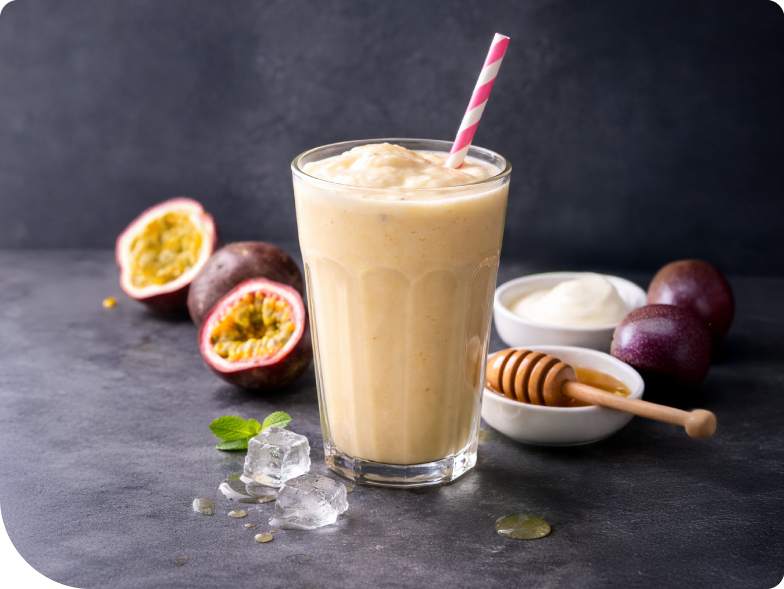
INGREDIENTS




PREPARATION
Wash the fruit: Wash the Passion fruit and cut it in half.
Scoop the pulp: Use a spoon to remove the pulp.
Blend: Add the pulp, yogurt, honey and water to a blender. Blend until smooth.
Add ice: Add ice to taste and blend briefly.
Serve: Serve chilled and enjoy.